
How AI is Changing Digital Marketing Careers in 2026
Explore the truth behind the rise of AI tools, their impact on content SEO workflows, and how to stay highly relevant in digital fields.
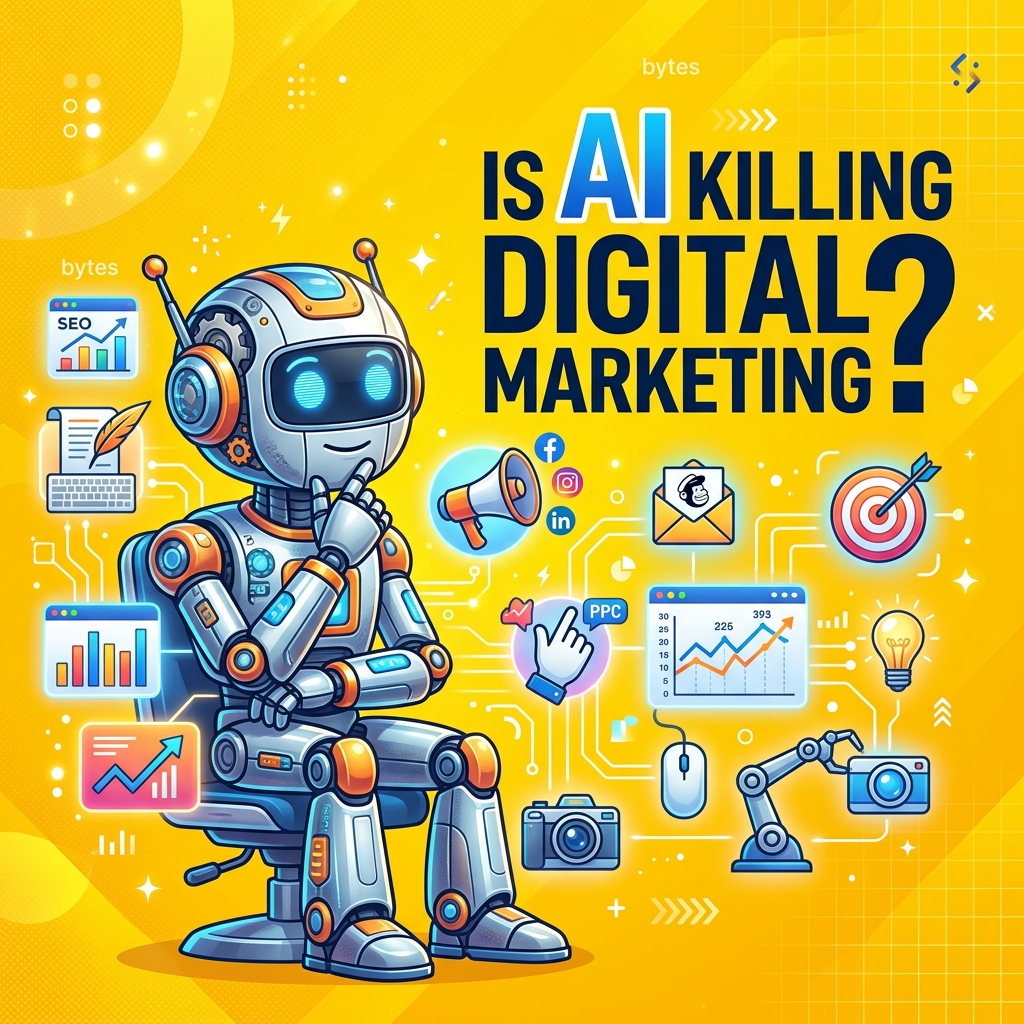
The conversation surrounding Artificial Intelligence (AI) in marketing has shifted from speculative curiosity to active integration. In 2026, AI is no longer a futuristic buzzword—it is the baseline tooling configuration for SEO specialists, copywriters, campaign managers, and growth hackers alike.
The Myth: "AI is Killing Marketing"
There is a widespread fear that AI text-generators and layout tools will completely replace human marketers. However, the reality is far more nuanced. While entry-level rote writing tasks have largely been automated, the demand for high-level strategy, data contextualization, and audience-empathy is higher than ever.
"AI doesn't replace marketers. Marketers who use AI replace marketers who don't."
The Transition of Workflow Routines
Previously, content managers spent 70% of their schedules on raw content generation and keyword mapping, leaving only 30% for distribution strategy and user feedback analysis. In 2026, the ratio is completely reversed. AI assists with:
- Automated Draft Generation: Generating outline variants and structural tags.
- SEO Cluster Modeling: Analyzing thousands of competitor search metrics in real-time to group topics.
- Ad Optimization Loops: Writing multivariate copies for landing ads and dynamically switching layouts based on real-time conversions.
How to Insulate Your Digital Marketing Career
To succeed as a modern marketer under Tech Drew's curriculum guidelines, focus on three primary skill domains:
- Prompt Engineering & Context Design: Learning to guide AI models with high-context parameters to produce custom-branded brand copy.
- Data Integrity & Analytics: Dissecting marketing dashboards and translating statistics into practical growth decisions.
- Technical Integration: Connecting API scripts, setting conversion pixel tracking, and running automated CRM rules.